
Highlights
- Mobile reverse osmosis can reduce dissolved solids, salts, microorganisms, and selected chemicals in water.
- Portable equipment can be brought directly on-site without requiring permanent treatment infrastructure.
- Water testing helps determine whether reverse osmosis fits the contaminants and water-quality goals.
- Pretreatment, membrane condition, pressure, and maintenance influence treatment performance.
- Certification and performance claims help users evaluate equipment for specific goals.
- Post-treatment testing can confirm results and reveal whether more treatment is needed.
How Do Mobile Reverse Osmosis Treatments Improve Water Quality?
Mobile reverse osmosis treatments improve water quality by bringing membrane-based purification equipment directly where treatment is needed. Instead of moving water elsewhere or investing in permanent infrastructure, a mobile system can process water on-site for temporary or project-specific needs.
Reverse osmosis uses pressure to move water through a semipermeable membrane while many dissolved substances remain in a separate concentrate stream. The U.S. Environmental Protection Agency explains that reverse osmosis can remove a wide range of contaminants, including dissolved solids, many inorganic substances, radionuclides, and synthetic organic chemicals. This capability makes mobile reverse osmosis useful when water quality must improve while source-water characteristics and treatment objectives are being evaluated.
What Can Reverse Osmosis Remove From Water?
Reverse osmosis can address several contaminant categories, although performance depends on the system, membrane, operating conditions, and water being treated. The Centers for Disease Control and Prevention notes that reverse osmosis systems can remove parasites, bacteria, and viruses while also removing or reducing certain chemicals. Potential chemical reductions include lead, copper, chromium, chloride, sodium, arsenic, fluoride, nitrate, and sulfate, depending on the system. That range matters because poor water quality is not always caused by one issue. A source may contain high mineral content, undesirable salts, or multiple contaminants simultaneously. Mobile reverse osmosis treatments can provide a flexible response when testing identifies several concerns that membrane separation may address.
When Are Mobile Systems Especially Useful?
Mobile systems are useful when water treatment is needed quickly, temporarily, or where permanent equipment is not practical. Common situations include:
- Construction, remediation, or industrial projects requiring treated process water for a defined period.
- Facilities experiencing equipment failure or maintenance that interrupts an existing treatment process.
- Remote sites where permanent treatment would require added time, space, permitting, or infrastructure.
- Pilot projects that let operators evaluate reverse osmosis before committing to a larger installation.
- Water-quality events requiring an adaptable approach while source conditions are investigated.
Because equipment can be deployed where needed, mobile treatment can help organizations respond to changing water demands without treating every situation as a permanent infrastructure project.
What Should Be Checked Before Treatment Begins?
A successful reverse osmosis project should begin with water testing and a clear definition of the desired treated-water quality. Important factors include:
- Total dissolved solids and salinity, which can influence membrane selection and operating pressure.
- Hardness, suspended material, iron, manganese, or organics that may contribute to membrane fouling.
- Specific contaminants that must be reduced and the equipment’s performance claims.
- Required production volume, flow rate, storage capacity, and daily treated-water demand.
- Plans for managing the concentrate stream produced during reverse osmosis.
- Pretreatment or post-treatment needed to protect the membrane or condition finished water.
These checks help match the treatment setup to actual site conditions rather than assuming one reverse osmosis configuration will perform identically with every source.
How Does the Treatment Process Work On-Site?
On-site reverse osmosis generally begins with source-water testing, equipment setup, and necessary pretreatment. Water is pressurized and directed across the membrane. A portion passes through as treated permeate, while another becomes concentrate containing substances rejected by the membrane. Operators monitor pressure, flow, conductivity, and other indicators to confirm that the system is functioning properly. Pretreatment may be important when source water contains particles, scale-forming minerals, or materials that can foul the membrane. After treatment, water may require additional conditioning depending on its intended use. The process is adjustable, allowing operators to respond when source-water quality changes or when a project requires different production rates, making mobile systems practical for variable field conditions.
Why Do Certification and Performance Claims Matter?
Certification and verified performance claims help distinguish marketing language from documented treatment capabilities. NSF states that NSF/ANSI 58 covers point-of-use reverse osmosis drinking-water systems and includes requirements related to material safety, structural integrity, total dissolved solids reduction, efficiency, recovery, contaminant-reduction performance, and user information. The standard also provides procedures for verifying optional reduction claims for contaminants such as arsenic, nitrate, lead, fluoride, copper, and certain volatile organic compounds. These details matter because no system should be assumed to remove every contaminant simply because it uses an RO membrane. Reviewing certification, membrane specifications, test data, and stated reduction claims helps ensure that equipment selection aligns with the water-quality goals identified through testing.
What Factors Affect Reverse Osmosis Performance?
Reverse osmosis performance depends on more than the membrane alone. Feed-water temperature, pressure, salinity, pH, fouling potential, membrane condition, and system recovery can influence treatment results and production capacity. Maintenance matters because clogged prefilters, scaling, damaged membranes, or improper cleaning can reduce efficiency and water quality. For mobile systems, site logistics add another layer. Operators may need electrical service, feed-water connections, equipment space, treated-water storage, and an appropriate concentrate-management method. Regular monitoring helps identify changes before they significantly affect output. When mobile reverse osmosis treatments are supported by proper pretreatment, operating controls, maintenance, and knowledgeable oversight, they can provide consistent treatment while offering flexibility for temporary or changing projects.
How Can Users Confirm That Treatment Worked?
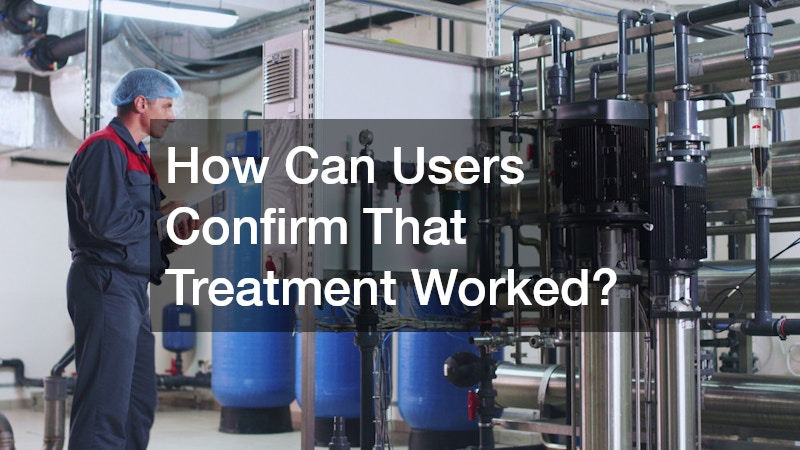
Users can confirm treatment performance by comparing source-water and treated-water test results against specific quality targets. Conductivity or total dissolved solids readings can provide rapid operational feedback, while laboratory testing may be necessary when the goal involves regulated contaminants, microorganisms, or substances that basic field instruments cannot evaluate accurately. Results should be reviewed alongside certified or documented performance claims, because successful treatment means meeting the required endpoint rather than simply producing clearer-looking water. Ongoing testing can reveal when membrane performance declines or changing source conditions require adjustments. With appropriate equipment, careful testing, and informed oversight, mobile reverse osmosis can provide a practical, measurable, and adaptable path toward consistently better water quality across diverse, changing site conditions.